
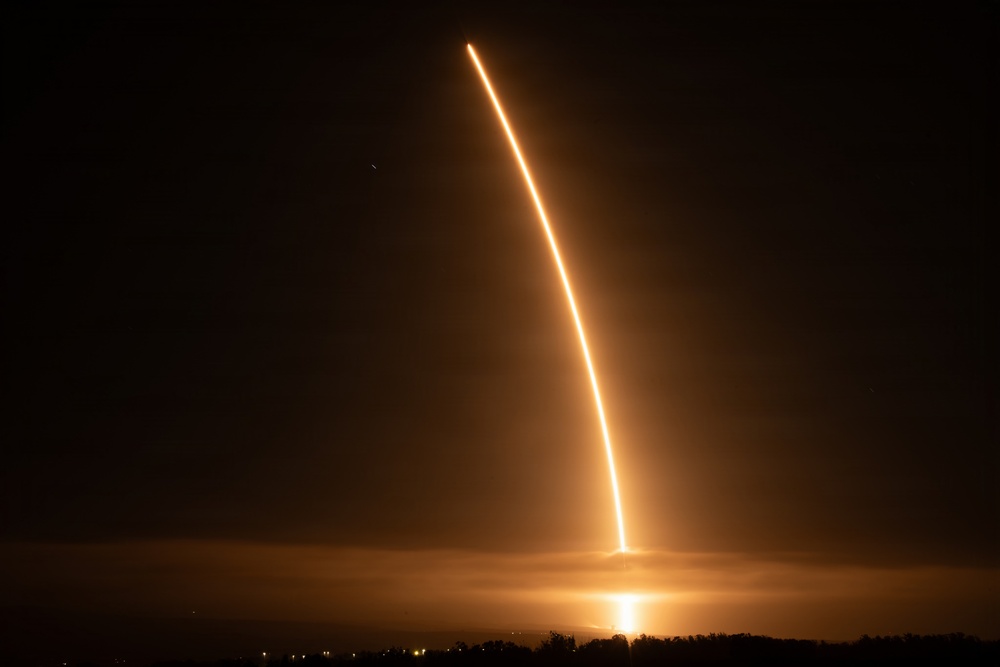
At 04:04 UTC on 31 October, a Falcon 9 lifted off from Vandenberg with 27 Starlink satellites. It was 05:04 in Paris but 30 October in California. Spaceflight Now calls Starlink 15-18 the 700th Falcon 9 launch, a cadence milestone for the reusable rocket.
Next Spaceflight records the launch as successful and lists a payload of 27 Starlink satellites bound for low Earth orbit. The batch belongs to Group 15 of the constellation. This flight adds communications spacecraft to the constellation SpaceX already operates, using Falcon 9 rather than Starship.
The B1093 first stage flew for the eighteenth time and landed on the Of Course I Still Love You droneship in the Pacific, Space.com reports. Reusing a stage spreads its manufacture across multiple missions, while the ship enables recovery far downrange. Repeating those operations is an industrial part of Starlink’s expansion.
The network is also changing by satellite generation. In September, Starship placed 26 V3 models in orbit, Light Reading reports; SpaceX credits them with much greater downlink capacity than V2 satellites. The October launch shows Falcon 9 continuing to add spacecraft to the existing constellation while Starship deployment develops in parallel.
Vandenberg has a concrete role in that cadence. A US Air Force environmental assessment describes expanded launch opportunities from the base and offshore landings as a response to military, civil and commercial demand. The 31 October flight used both operations: departure from SLC-4E and recovery at sea. Its significance lies in that repeatable chain as much as in the 27 satellites it carried.
Documents and references
- Spaceflight NowSpaceX closes out October with Halloween eve Falcon 9 launch
- Next SpaceflightStarlink Group 15-18
- Space.comSpaceX launches 27 Starlink satellites
- US Air ForceFalcon 9 Cadence Increase Environmental Assessment
- Light ReadingStarship reaches orbit, releases 26 V3 Starlink satellites