
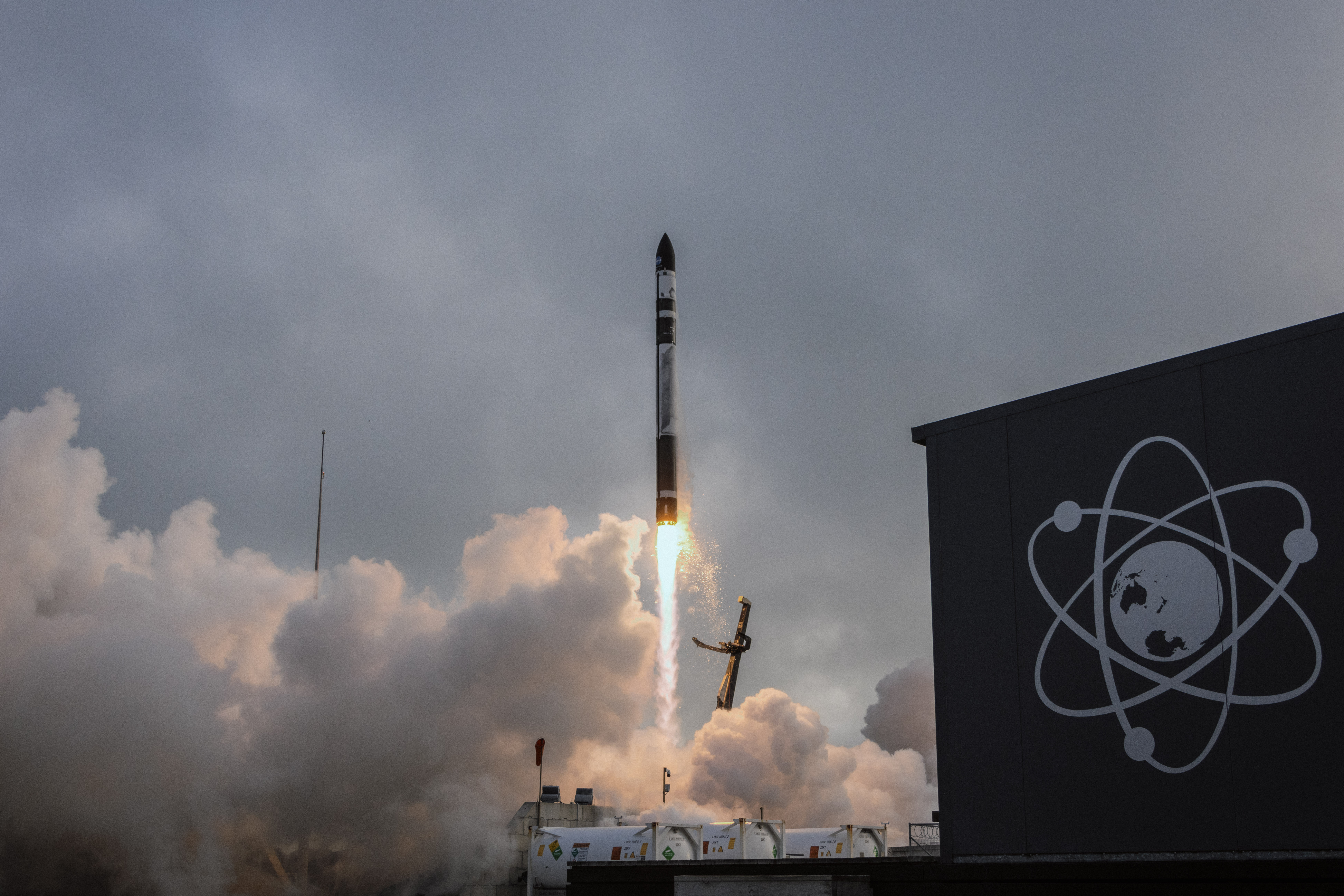
Electron lifted off from Māhia, New Zealand, at 5:41 a.m. local time on 3 November, or 16:41 UTC on 2 November. Rocket Lab’s launcher placed WADATSUMI-II, a Japanese iQPS radar satellite, into a targeted 575-kilometre orbit. It was Electron’s 99th flight and Rocket Lab’s twentieth mission of 2026.
iQPS identifies the spacecraft as QPS-SAR-20. It separated from the launcher about fifty minutes after liftoff and made first contact roughly thirty minutes later. The control team found its equipment responding properly. Engineers are now adjusting the satellite in orbit, deploying its antenna and preparing to collect the first radar images.
The QPS-SAR series uses synthetic-aperture radar: each satellite transmits its own signal and can image the surface at night or through cloud. An earlier Rocket Lab mission dossier describes predecessor WADATSUMI-I, launched in 2025, and its 575-kilometre orbit. The new unit joins the observation network iQPS is building to shorten the interval between passes.
Rocket Lab’s mission record gives the new satellite an orbital inclination of 42 degrees. That path supports the areas iQPS wants to revisit regularly, particularly across the Asia-Pacific region. The company lists this as its tenth Electron launch for the Japanese operator. WADATSUMI-II still needs commissioning before it can supply its own imagery.
iQPS is also preparing QPS-SAR-19, named YAMATSUMI-II, for another Electron flight. Its window opens no earlier than 14 November. For WADATSUMI-II, the first image after antenna deployment will be the next public demonstration of the radar in operation.