
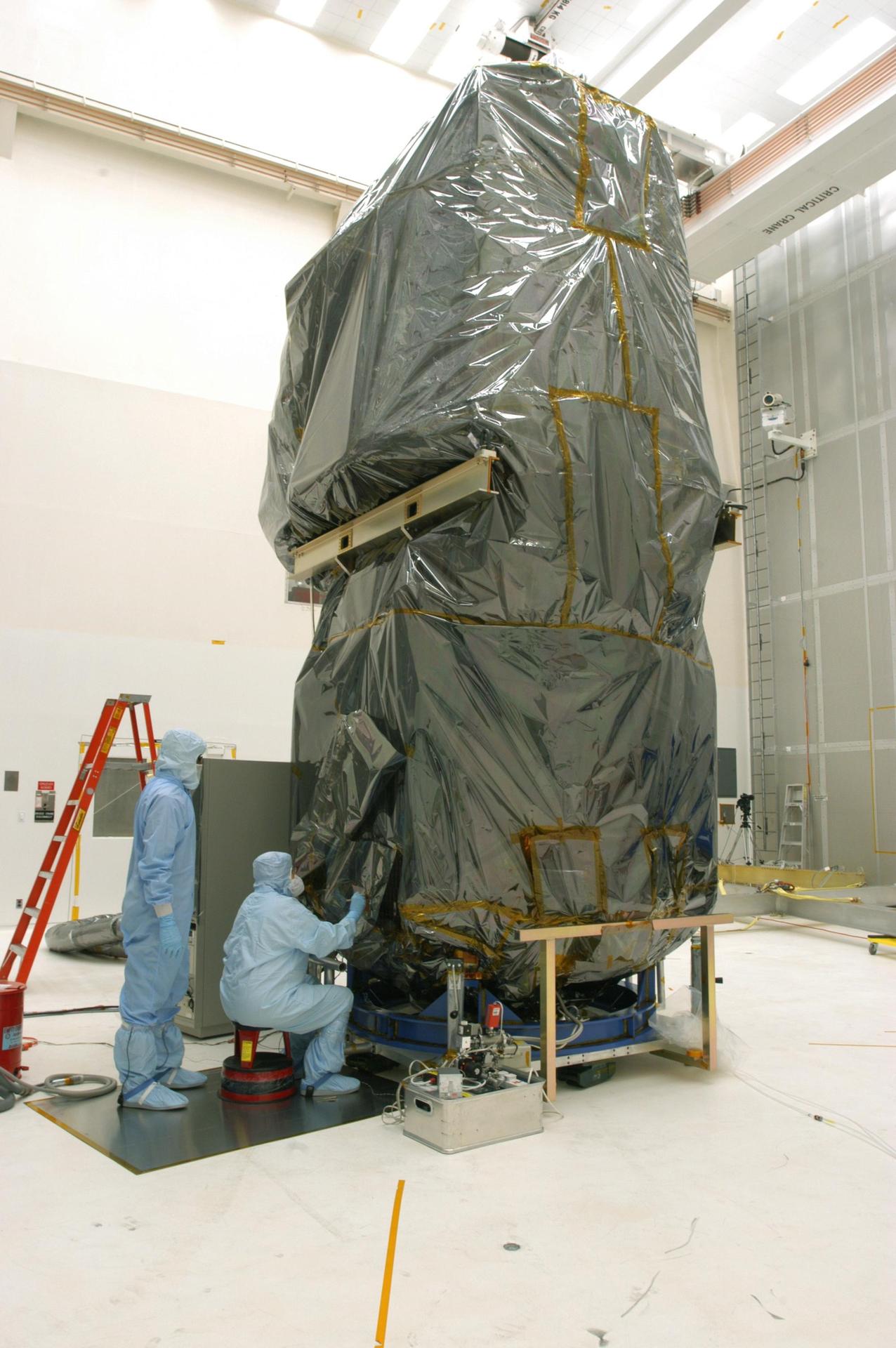
NASA confirmed Swift’s reentry over North Sumatra, Indonesia, at 12:39 UTC on 4 November, almost twenty-two years after launch. It expected most of the spacecraft to burn up and reported no recovered debris on the ground.
Swift hunted gamma-ray bursts and could turn quickly toward a transient source, then follow it with gamma-ray, X-ray, and ultraviolet-optical instruments. It sent alerts that helped other telescopes coordinate observations. The observatory was designed for a two-year prime mission but worked for almost twenty-two years. NASA ended operations on 23 October after a final observing period, when the spacecraft could no longer overcome drag at an altitude of about 275 kilometres.
NASA had tasked Katalyst Space with raising Swift’s orbit. Attitude-control problems aboard its LINK vehicle ended the capture plan. In September, LINK continued a technology demonstration: it deployed three robotic arms and approached within 12 to 15 kilometres of Swift, without coming closer. It also tested its electric thrusters. Those operations gathered rendezvous data but did not reverse the observatory’s orbital decay.
The Aerospace Corporation’s Center for Orbital and Reentry Debris Studies tracked the descent using Space Force surveillance data and other inputs. It issued successive estimates of reentry time and location for the public and industry. That work addressed growing uncertainty as an object of roughly 1,450 kilograms approached denser atmospheric layers. The confirmed location over Sumatra now provides an observed endpoint against which those forecasts can be compared.
NASA’s CCMC is using Swift’s reentry to test thermospheric-density models, a major source of uncertainty in drag and return-time estimates. Its challenge invites teams to submit density, trajectory, and timing predictions and compare them with the observed event. Swift’s astronomical observations are over, but its final orbit becomes a useful measurement for improving the tracking of future satellites near the end of their lives.
Documents and references
- NASANASA’s Swift Observatory Re-Entered Atmosphere
- NASANASA’s Swift Mission Ends Ahead of Re-Entry
- NASACommercial Spacecraft for NASA’s Swift Boost Continues Tech Demo
- The Aerospace CorporationCORDS keeps public informed as NASA’s Swift Observatory reenters atmosphere
- NASA CCMCSwift Re-entry and Thermosphere Neutral Density Modeling Challenge