
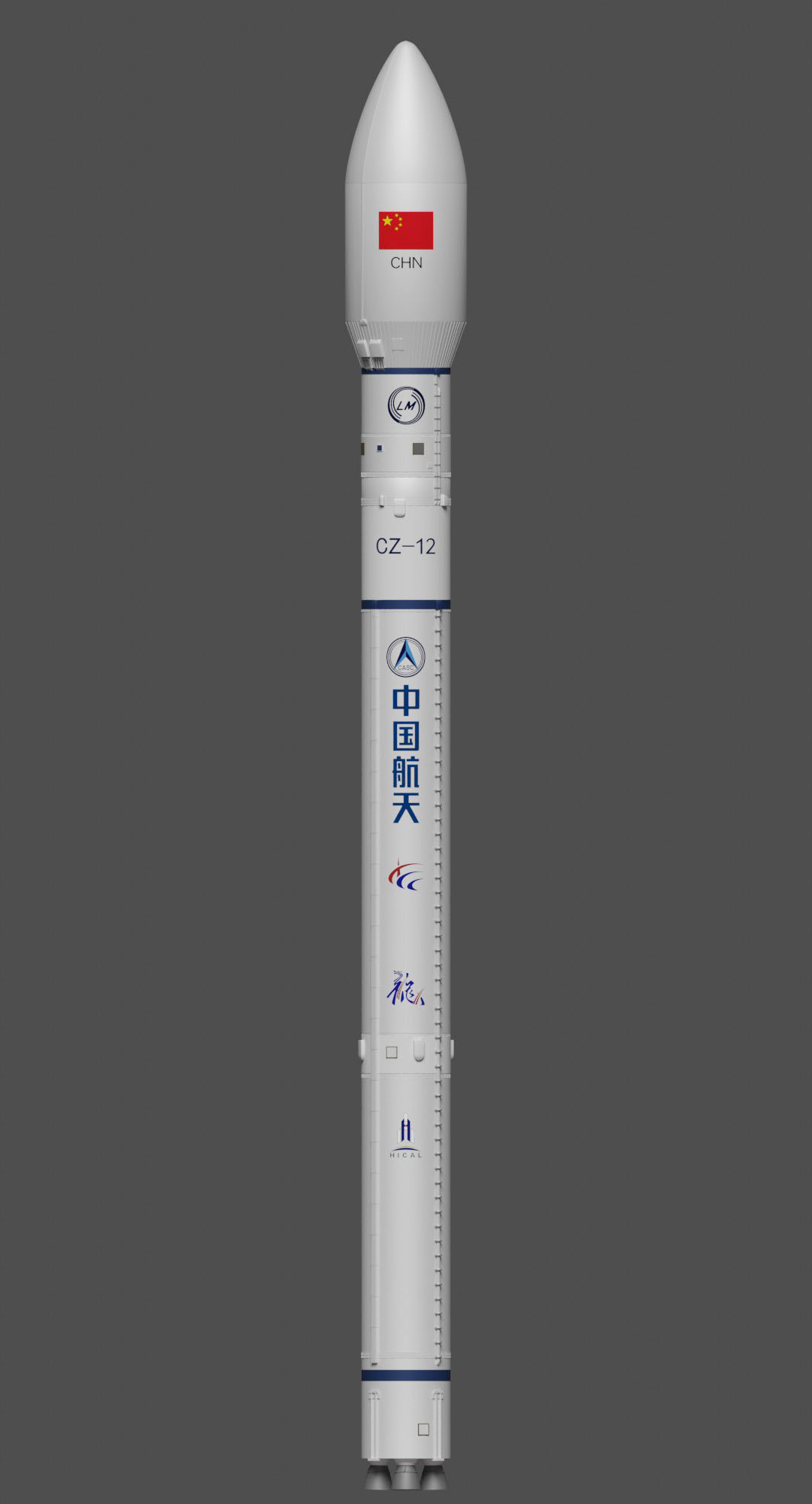
Long March 12 lifted off from Hainan at 04:24 Beijing time on 9 November with China’s 29th low-orbit internet satellite group. CASC confirms insertion into the intended orbit and identifies its Fifth Academy as the satellite developer. The launch corresponds to 20:24 UTC on 8 November; the manufacturer’s statement is dated 9 November.
China’s Ministry of Industry and Information Technology confirmed the launch in a notice posted at 09:01. Its distinct contribution concerns the less visible part of the mission: it says it coordinated domestic frequencies and issued space-station radio licences and spectrum-use permits in batches. For a constellation, this work has to accompany repeated deployments so satellites can communicate while limiting interference with other authorised systems.
Long March 12 is a two-stage launcher about 62 metres tall. CASC’s product sheet rates it for at least 12 tonnes to low Earth orbit and at least six tonnes to a 700-kilometre sun-synchronous orbit. The 9 November mission uses this launch capability to deploy a satellite network.
An October report describes how that infrastructure is expanding. Wenchang’s first two pads were in use; the second combines a mobile launch platform with horizontal rocket processing. Two further pads were under construction. The site is therefore being built for more than one rocket’s departures: it aims to distribute missions across facilities while local industry adds spacecraft manufacturing and space-data processing capacity.
China’s satellite-communications policy provides the broader framework. A 2025 ministry directive supports low-orbit internet networks, commercial trials and access in remote areas. It also provides for batch frequency permits to speed deployment. Group 29 therefore connects three strands of work: manufacturing and launching satellites, preparing their radio use, and developing services that can reach users beyond terrestrial networks.
Documents and references
- China Aerospace Science and Technology CorporationLong March 12 successfully launches low-orbit internet satellite group 29
- China Ministry of Industry and Information TechnologyChina successfully launches low-orbit internet satellite group 29
- Hunan Department of Industry and Information TechnologyHainan commercial space industry grows
- China Ministry of Industry and Information TechnologyGuidance on satellite communications market access
- China Aerospace Science and Technology CorporationLong March 12 product specification