
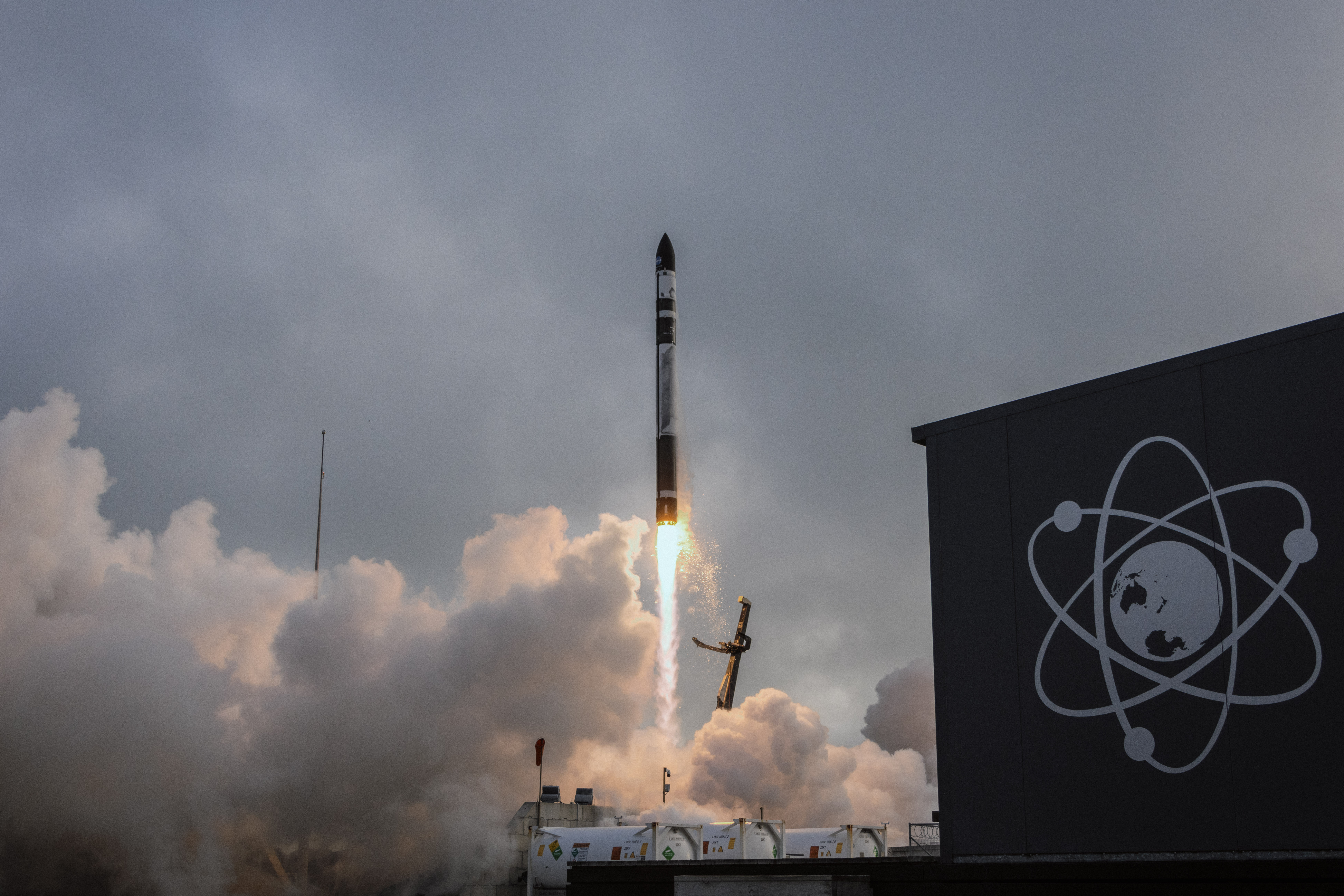
At 6:30 p.m. New Zealand time on 14 November, or 05:30 UTC, Electron lifted off from Mahia on its 100th flight. Rocket Lab confirms the success of The Mountain God Rises and deployment of iQPS's YAMATSUMI-II radar satellite to its targeted 575 kilometre orbit. Electron first flew in 2017.
The spacecraft owner supplied a separate confirmation. iQPS says QPS-SAR-19 separated from the launcher about 50 minutes after liftoff and first contact followed roughly eight minutes later. Controllers checked the health of its onboard equipment. Antenna deployment and acquisition of the first images are the mission's next steps.
Rocket Lab's mission profile says Electron carried one QPS-SAR satellite on this dedicated flight. It specifies a 575 kilometre low Earth orbit inclined at 42 degrees. For iQPS, those parameters fit the staged construction of its constellation: each deployment adds a potential observation point. A dedicated mission lets the operator target an orbital plane useful for successive observations.
Synthetic aperture radar sends its own signals towards the surface and measures the returns. It can therefore observe at night and through cloud, unlike an optical instrument dependent on daylight and clear skies. iQPS is building a constellation to shorten the interval between observations of the same location. Each additional spacecraft expands revisit opportunities after its in orbit performance has been checked.
Electron is a small launcher built with carbon composite structures. Its first stage uses nine Rutherford engines and its second stage a vacuum version; the engines use electric pumps and three dimensional printed components. That architecture serves payloads smaller than those of heavy launch vehicles. For iQPS, repeated dedicated missions provide a way to place radar satellites in sequence as the constellation grows.