
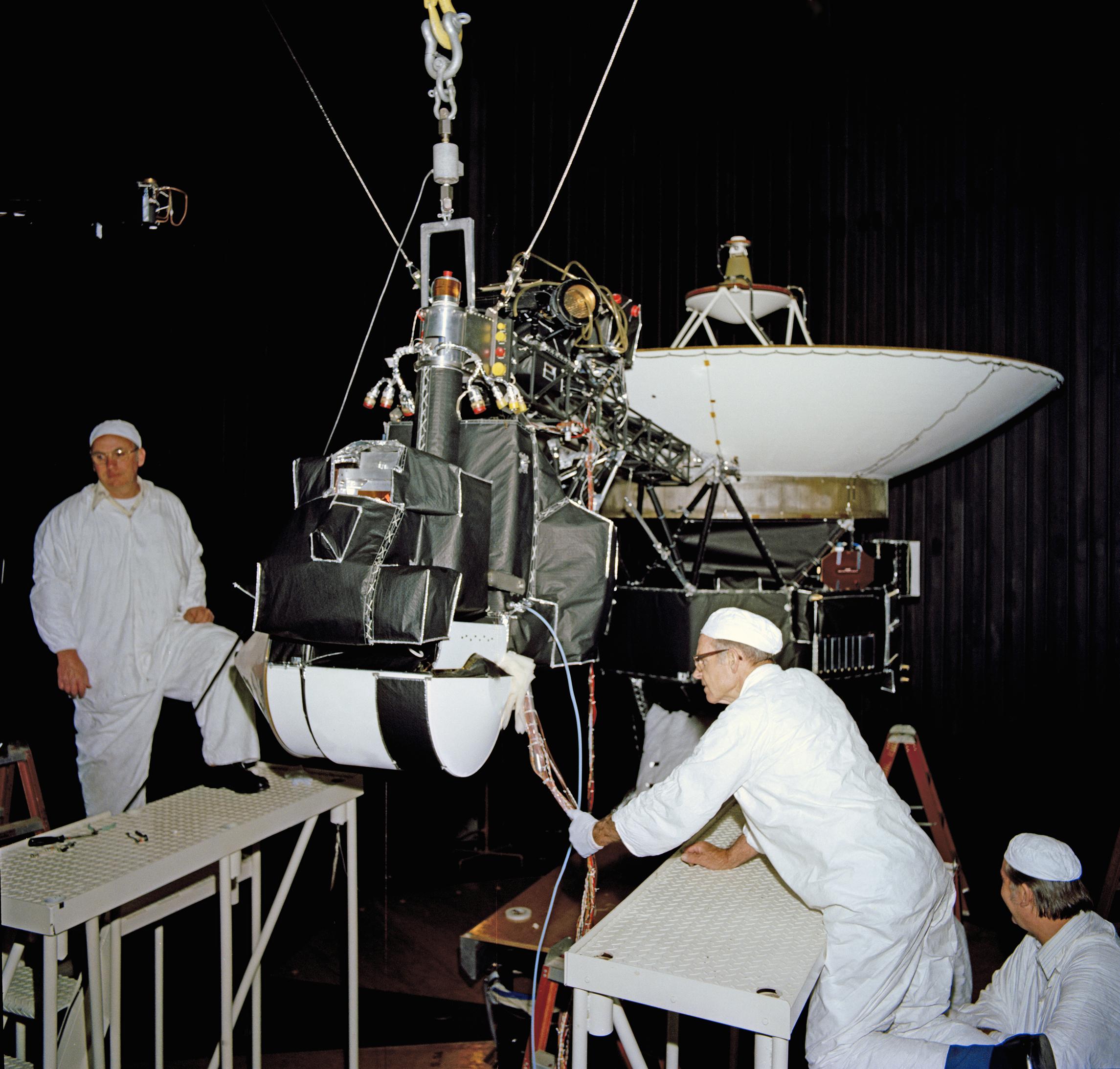
NASA announced on 19 November that Voyager 1 had reached one light-day from Earth at 5:16 a.m. Eastern time on the 18th. It was 25.9 billion kilometres away. A signal takes 24 hours to reach it. Controllers received confirmation the next day.
The probe left Cape Canaveral on 5 September 1977 to fly past Jupiter and Saturn. It overtook Pioneer 10 in distance in 1998 and crossed the heliopause into interstellar space in 2012. Voyager 2 took a different trajectory and entered that region in 2018. The light-day threshold measures Voyager 1's present distance; its science mission had already shifted beyond the planetary encounters.
The radio delay requires patient operations. A command sent from Earth takes a day to arrive; its response needs another day. NASA uses the Deep Space Network, with large antenna complexes in California, near Madrid and near Canberra. Their spread in longitude lets another site take over as Earth rotates a spacecraft out of view. The dishes focus and amplify a signal that has become extremely faint.
NASA says it has not received Voyager 1's science and engineering data since 14 November, although its radio carrier remains detectable. Engineers combined that carrier with trajectory calculations to establish the milestone. The distinction matters: the spacecraft still emits a detectable signal while its normal telemetry content is interrupted. The team is analysing the interruption without treating it as a complete loss of contact.
Power is the other major constraint. Voyager 1 draws electricity from radioisotope generators mounted on a boom away from its instruments. Available power falls over time, so the mission has switched off equipment to extend operations. The magnetometer and plasma wave instrument are among the tools used to study the surrounding medium. At this distance, every power saving and antenna session extends the scientific value of a nearly 50 year old spacecraft.