
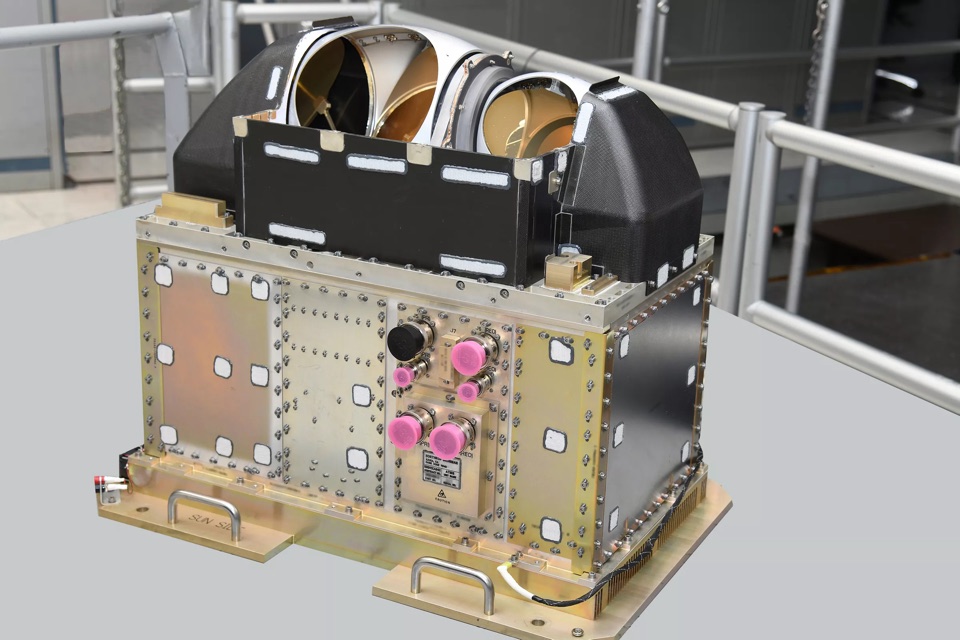
On 23 November, NASA awarded Northrop Grumman a $290.6 million contract for three SMBA microwave sounders in NOAA's NEON programme. The award covers design, development, production, testing and mission support. The contract runs to April 2042; this is not a launch date. NASA manages the procurement for NOAA, which will operate the instruments and distribute their data.
NEON is intended to renew low Earth orbit environmental observations progressively. NOAA describes a looser set of satellite projects using small or medium spacecraft launched more frequently. Series 1 is planned to carry the programme's first new SMBA instrument. Ordering three units establishes an industrial path for that sensor family, while the timing of individual spacecraft belongs to the wider satellite programme.
The programme will supplement and eventually replace the polar JPSS system. A NOAA fact sheet places SMBA alongside a future infrared sounder to preserve temperature and moisture observations. Maintaining those measurements matters for forecasts and hazard monitoring during the transition between satellite generations. An instrument order prepares that replacement; it does not mean the new spacecraft are already delivering data.
A microwave sounder receives radiation at different frequencies to reconstruct atmospheric profiles. NOAA explains that those measurements penetrate clouds better than infrared observations. Temperature and moisture profiles then feed forecast models. SMBA belongs to that technical line: its expected value comes from repeated measurements across large areas, combined with other weather observations rather than visible pictures of Earth.
The existing ATMS sounder on JPSS provides a useful comparison. NOAA says it works with the infrared CrIS instrument to produce atmospheric profiles in cloudy and clear conditions. NOAA's ATMS fact sheet also identifies Northrop Grumman as its contractor. The SMBA award covers a new generation and three units, extending sounder expertise already used in the weather fleet without making the two instruments technically identical.