
France's defence procurement agency has awarded the Iris system to Airbus Defence and Space and Thales Alenia Space. Announced on 9 November, the contract covers two imaging satellites, ground segments and operations. Airbus values it at more than €1.5 billion through the late 2030s. Iris is intended to maintain independent French military access to very-high-resolution imagery.
The industrial split separates spacecraft platforms from imaging instruments. Airbus supplies both platforms and leads the ground segment; Thales Alenia Space develops the second satellite's optical payload and parts of the first. For the second instrument, Thales plans a highly stable telescope, active optics and fast digital sensors. The system is designed to collect visible and infrared imagery, including at night, and distribute the data securely to military users.
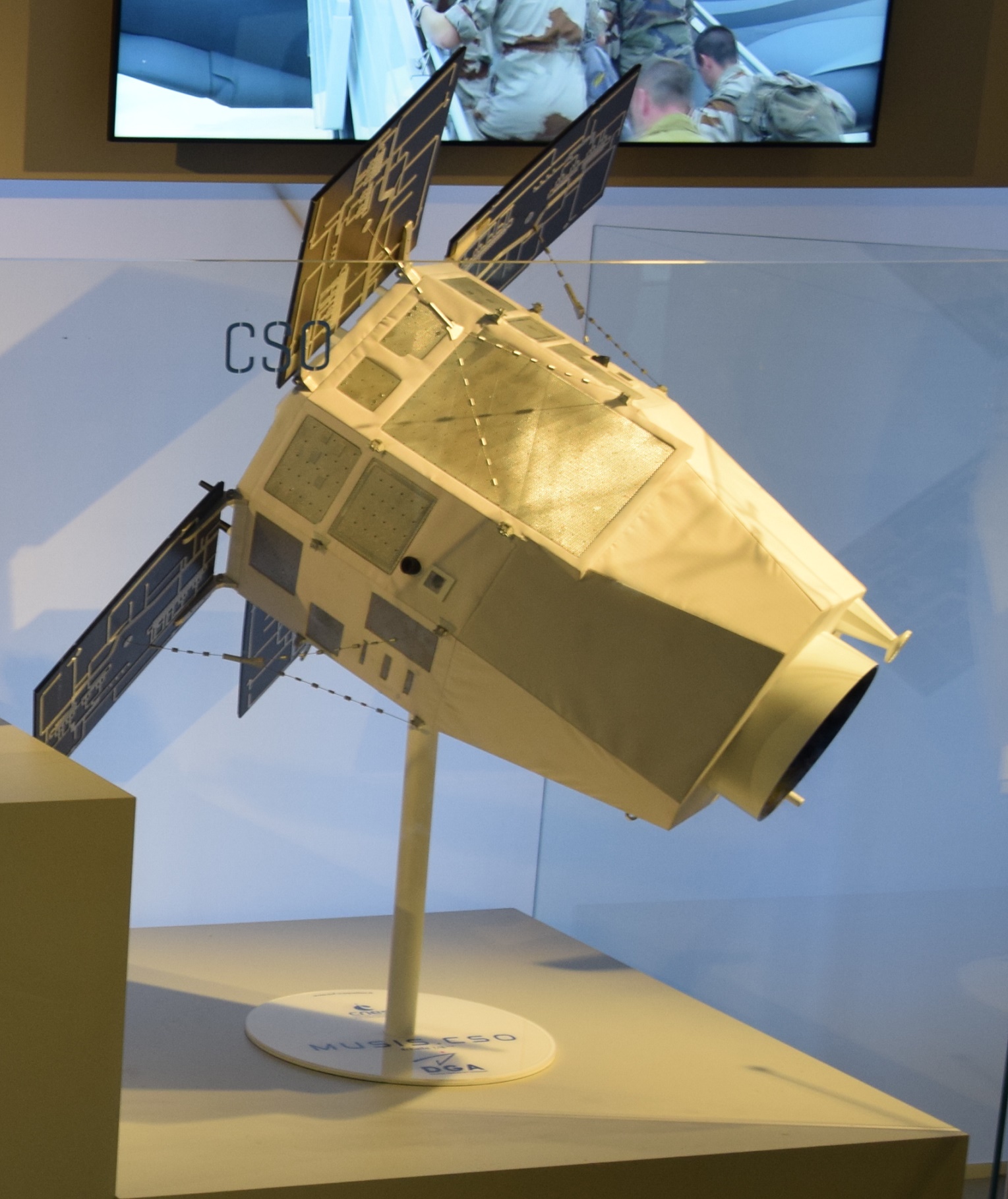
Iris will succeed the Optical Space Component, or CSO, of the Musis programme. CNES describes the present fleet as three military satellites launched between 2018 and 2025. Their orbits support two complementary tasks: reconnaissance at about 800 kilometres favours coverage and repeat visits, while identification at about 480 kilometres supplies more detailed imagery. That architecture explains why the replacement must preserve both timely access to an area and analytical precision.
The intelligence chain extends beyond the optical payload in orbit. For CSO-3, Airbus supplied the platform, avionics and satellite integration, while Thales Alenia Space provided the instrument. Airbus also built a ground user segment for the procurement agency and Space Command to distribute imagery confidentially. The Iris contract extends this industrial partnership with a new generation of sensors and processing systems, where the time between acquisition and delivery matters alongside image quality.
CNES notes that CSO images support military intelligence and operations in both visible and infrared bands. Infrared observations can reveal heat-related activity that daylight photography alone may miss. National control of image collection, processing and distribution lets France set its own observation priorities and protect sensitive information. Iris carries forward that sovereignty objective while remaining open, like Musis, to cooperation with European partners.
Documents and references
- AirbusAirbus to deliver IRIS, France's next generation military Earth observation satellites
- Thales Alenia SpaceThales Alenia Space at the heart of the future IRIS military optical observation program
- CNESCSO / MUSIS
- AirbusAriane-6 launches CSO-3: double success for France and Europe
- CNESCSO-3 complète la souveraineté spatiale française