
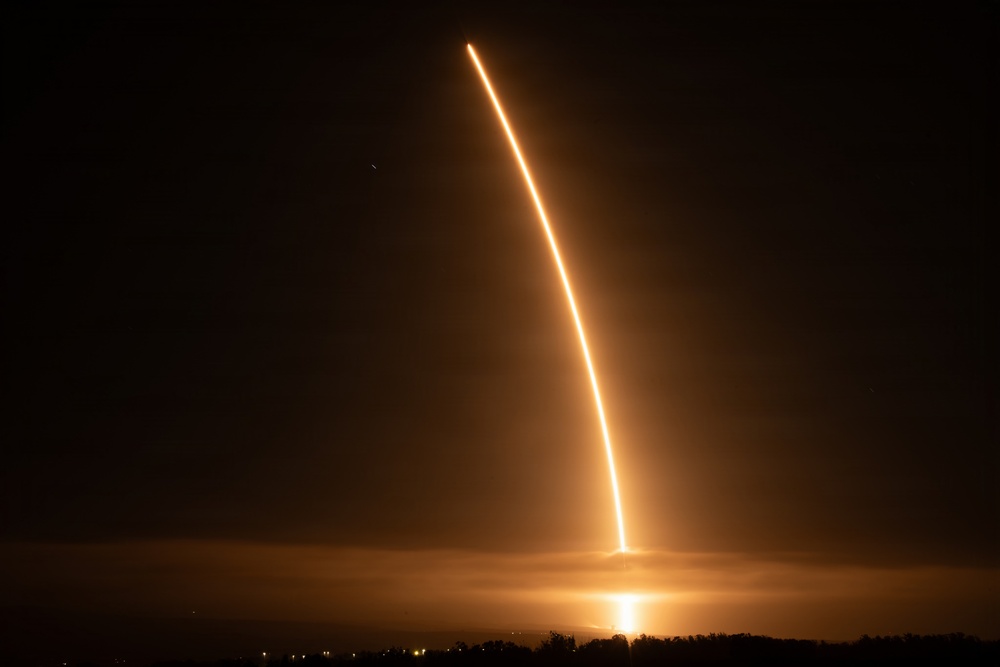
On 8 August, a Falcon 9 lifted off from Vandenberg at 9:35 a.m. Pacific time with 24 Starlink satellites later deployed in orbit. Spaceflight Now counted SpaceX’s 50th California launch in 2026. First stage B1093, previously flown 15 times, landed offshore. The milestone concerns the operator’s California flights.
An FAA operations advisory issued the previous day listed Starlink 17-38 at Vandenberg. The scheduling notice did not establish the outcome, but it exposes a constraint less visible than the rocket: every flight needs a window coordinated with air traffic. As launches become more frequent, controllers, the base and recovery crews form part of the capacity needed to sustain them. A scheduled window and a completed mission are separate records, which is why the launch report matters.
The build-up also has a public regulatory history. An earlier FAA environmental review assessed an increase from 36 to 50 annual Falcon 9 launches at Vandenberg, alongside more offshore recoveries. Reaching 50 flights on 8 August makes it important to separate that earlier assessed scenario from current licensing terms. The count demonstrates acceleration but does not, by itself, define the active permit. The review also considered first-stage and fairing recovery activities in the Pacific.
SpaceX describes Falcon 9 as an orbital launcher with a reusable first stage: recovering and reflighting its most expensive part reduces access costs, the company says. B1093 illustrates that approach. Launch pace also depends on preparing stages between flights, keeping recovery vessels and crews available, and demand from the Starlink network itself.
The FAA’s 2026 forecast expects growth in commercial space operations, but its ranges do not predict one operator’s or one base’s rate. The California milestone instead exposes an integrated chain: satellite production, booster availability, launch facilities, airspace access and recovery. Its durability will be better judged by whether that chain keeps working consistently than by one day’s tally. Demand for replacement and new satellites may vary even when launch vehicles are available.
Documents and references
- Spaceflight NowSpaceX West Coast launch surge continues with Starlink mission
- Federal Aviation AdministrationATCSCC Advisory, 7 August 2026
- US Space Force / FAAFinal Environmental Assessment: Falcon 9 Cadence Increase
- SpaceXFalcon 9
- Federal Aviation AdministrationFAA Aerospace Forecast Fiscal Years 2026–2046